
World HeTu Chinese
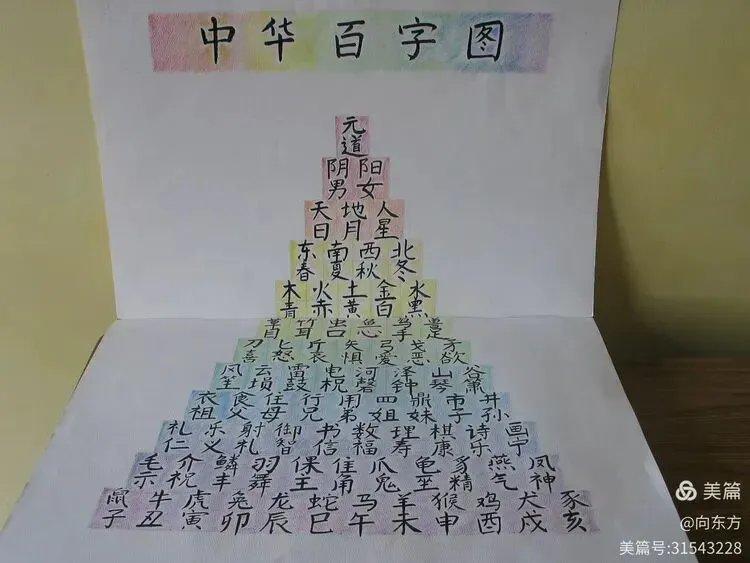
World HeTu Chinese is a curriculum for learning and teaching Chinese. The source describes an organic course beginning with the “Hundred-Character HeTu” and extending to speaking, literacy, conversation, culture, grammar, writing, drama, and main lessons.
The curriculum draws on Chinese language and cultural resources, bringing games, rhymes, stories, drawing, handwork, drama, and festivals into language learning.
Curriculum content
- The “Hundred-Character HeTu” and “Hundred-Character Chinese” serve as introductory literacy materials.
- Rhymes, games, and mythic stories form oral-language materials connected with children’s developmental stages.
- Pinyin, phonetic study, and sound-rhyme Taiji exercises support pronunciation learning.
- “Thousand-Character Chinese” extends literacy work into Chinese geography, history, humanities, science, and social ethics.
- Materials such as “Hello,” “You and I,” and “You, Me and Others” organise everyday Chinese conversation.
- A cultural curriculum addresses Chinese geography, history, literature, society, and technology, with study travel, writing, research reports, and drama.
- A comprehensive Chinese-language course uses classic and modern texts to study punctuation, structure, sound, and cultural meaning.
- Chinese grammar is explored through HeTu approaches to colour, sound, characters, sentences, and composition.
- Writing is learned through drawing journals, study-travel observation, and sensory-development activities.
- Dramas adapted from folk stories or classics support speech and presentation from Grades 1 through 12.
- Chinese main-lesson examples and course materials are offered for different grades.
- The curriculum includes outlines for Chinese as a mother tongue, as one bilingual language, and as a second foreign language.
Teaching methods
- Chinese is introduced through listening, speaking, writing, and reading, connecting oral language with games, rhymes, handwork, drawing, and stories.
- The pictorial quality of characters is linked with the breath of pronunciation, using sound-rhyme Taiji exercises to extend language learning into body and space.
- Assessment is varied across stages, and learners are encouraged to create their own Chinese textbooks, grammar books, and dictionaries.
- The classroom reduces reliance on audiovisual aids and uses speech, drawing, and demonstration to create a living atmosphere for language and imagination.
- Cyclical thematic teaching organises drama, excursions, drawing, handwork, and gatherings around age, season, festivals, and current events.
- Learners recite, speak, and compare languages in context; grammar draws patterns from examples and is carried into decoding, word-building, sentence-making, and writing.